
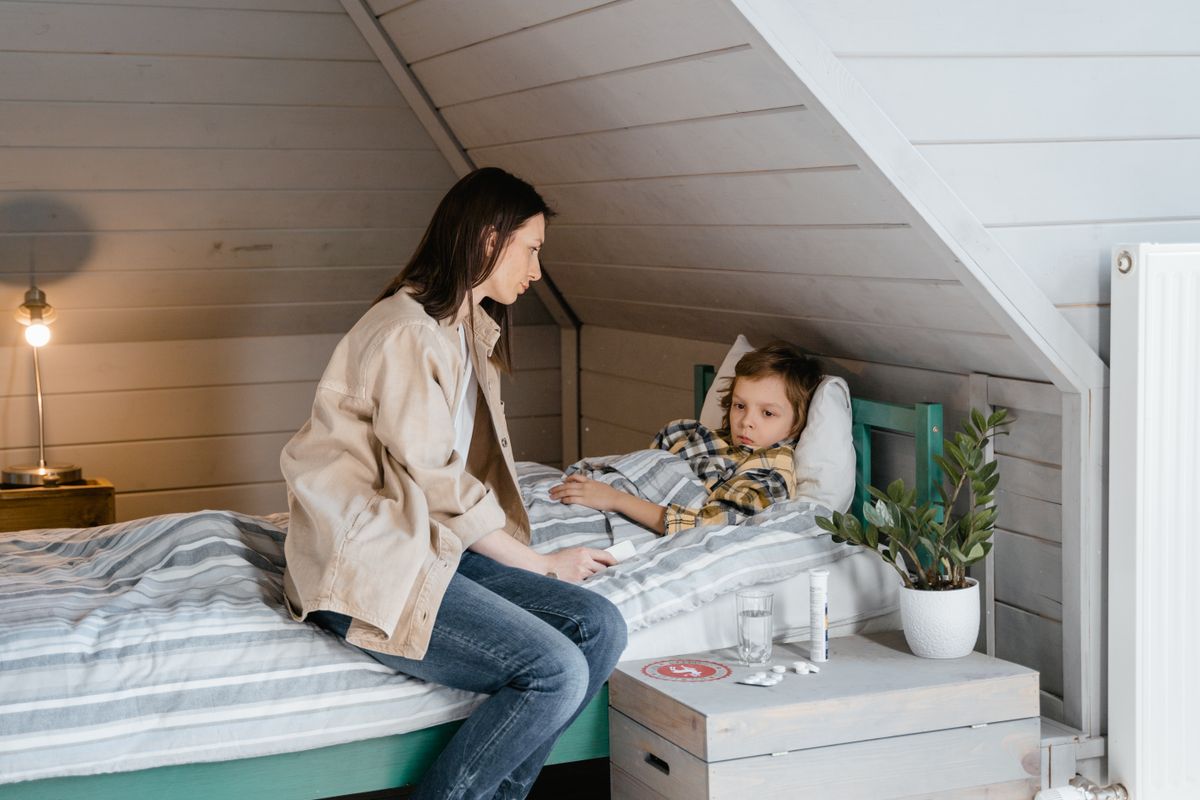
Fever is not a disease but a natural mechanism the body uses to fight infection. A rise in body temperature helps the immune system work better. So the aim of caring for a fever in children is not to "push the number" down as fast as possible, but to make your child more comfortable, keep them drinking, and watch for danger signs.
When does it count as a fever?
In general, a child is considered to have a fever when the body temperature is 37.5°C or above. More important than the number, though, is your child's "overall condition". A child with a not-very-high fever who is drowsy and refusing milk may be more concerning than a child with a higher fever who is still playing, smiling and eating normally.
How to care for a feverish child at home
The goal is to help your child stay comfortable and not become dehydrated while their body fights the infection.
- Sponge with room-temperature water (not very cold water or ice) over the neck creases, armpits and groin to help release heat.
- Give frequent drinks, or breastfeed/feed as usual in young children, to prevent dehydration.
- Dress them in light, airy clothing, not in heavy covers or many layers, and keep them in a well-ventilated room.
- The antipyretic paracetamol should be given according to body weight, spaced as specified — if you are unsure of the dose, consult a doctor or pharmacist.
It is worth repeating: watch your child's "overall condition" more than the number on the thermometer. A child who is still cheerful, drinking well and responding normally is usually less concerning than one who has become drowsy even if the fever is not high.
- It counts as a fever when the temperature is 37.5°C or above.
- Sponge with room-temperature water, give fluids, and dress them lightly.
- Give the antipyretic paracetamol by body weight and space the doses as specified.
- Your child's overall condition matters more than the temperature number.
Most fevers are not something to fear
Most fevers in children are caused by viral infections that resolve on their own. Correct home care and watchful observation are usually enough. What parents should remember well are the "danger signs" that tell you to see a doctor urgently.
Signs that mean you should take your child to a doctor immediately
- A baby under 3 months with a fever of 38°C or above — see a doctor immediately.
- Seizures, stiffening or twitching.
- Very drowsy, hard to wake, or not responding normally.
- Refusing to drink milk or water, with a clear drop in urination.
- Rapid breathing, laboured breathing, indrawing of the lower ribs, or blue lips.
- A purplish rash that does not fade when pressed.
- High fever lasting more than 2–3 days, or unusually persistent crying or fussiness.
Doctor Chat Clinic cares for children's health, providing health checks and childhood vaccinations, all by a doctor. If your child has a fever and parents are unsure whether to continue home care or have them examined, you can call or chat for advice so the doctor can help assess and guide you.