
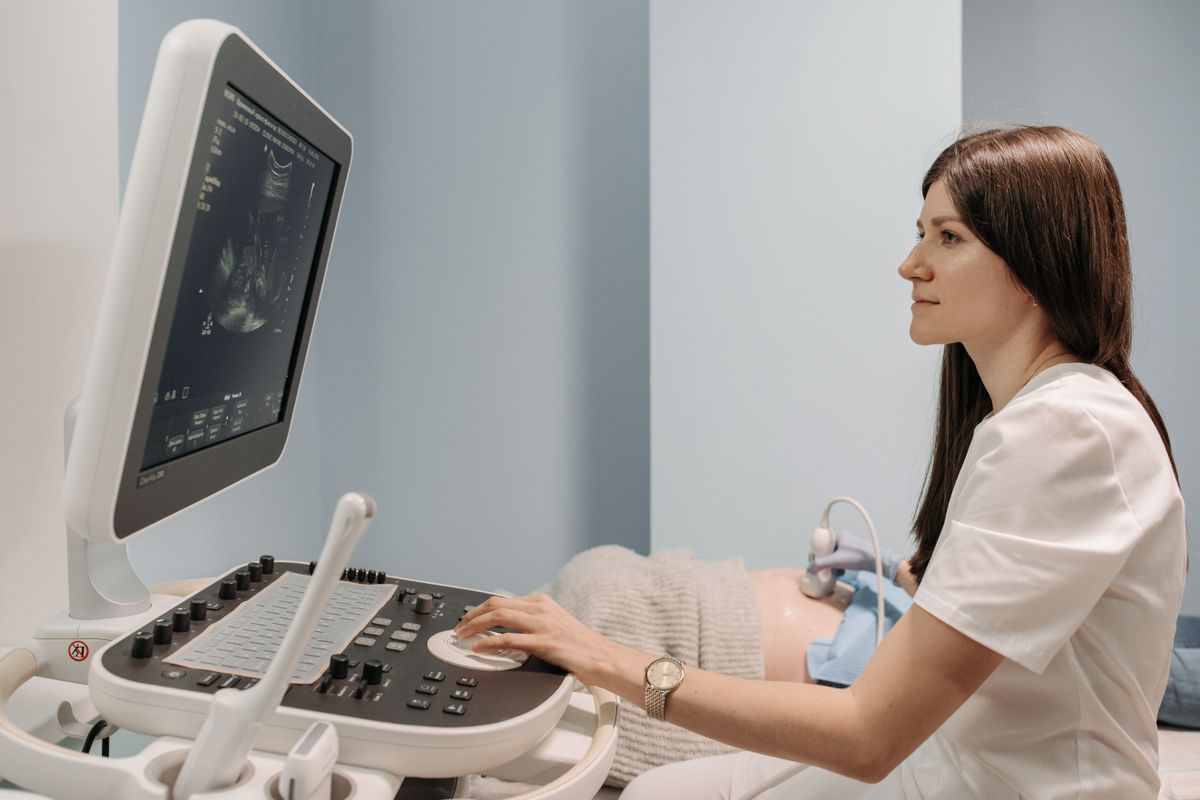
Ultrasound is an examination that uses high-frequency sound waves passed through the skin into the body, which then reflect back to create real-time images of the internal organs. Its key advantages are that it has no radiation, is safe, and is painless, which is why it is widely used to examine the abdominal organs and to monitor various conditions as often as needed.
What can an abdominal ultrasound check?
An abdominal ultrasound can be divided into the upper and lower abdomen, covering several important organs.
- Upper abdomen — the liver, gallbladder, pancreas, spleen and kidneys
- Lower abdomen — the uterus, ovaries, bladder and prostate
The examination helps the doctor find a range of abnormalities, such as stones in the gallbladder or kidneys, fatty liver, masses, and cysts, as well as assessing the size and appearance of organs.
- Uses sound waves — no radiation, safe and painless
- Can detect stones, fatty liver, masses and cysts
- Shows organ images in real time and can be repeated as needed
How to prepare before the test
Preparation depends on the organ to be examined. An upper-abdomen scan, such as the liver and gallbladder, usually requires fasting for about 6–8 hours to get clear images. A lower-abdomen scan, such as the uterus or bladder, usually requires drinking water and holding your urine so the bladder is full. The clinic will tell you the correct way to prepare before your test day.
Who should have an abdominal ultrasound?
People with chronic abdominal pain, abdominal fullness, pain under the right rib cage, abnormal urination, or blood results indicating abnormal liver or kidney function should consider an abdominal ultrasound. It is also suitable as part of a health check for those who want to screen for abnormalities of the internal organs early.
Examination services at the clinic
Doctor Chat Clinic offers health checks, blood tests, ultrasound, and electrocardiograms (EKG) by a doctor, along with assessment of symptoms, interpretation of results, and appropriate health advice.
Symptoms that need urgent medical care
- Severe, sudden abdominal pain, or abdominal pain together with a high fever
- Yellowing of the skin or eyes, or unusually dark urine
- A palpable lump in the abdomen, or rapidly worsening abdominal swelling
- Vomiting blood or passing bloody stools