
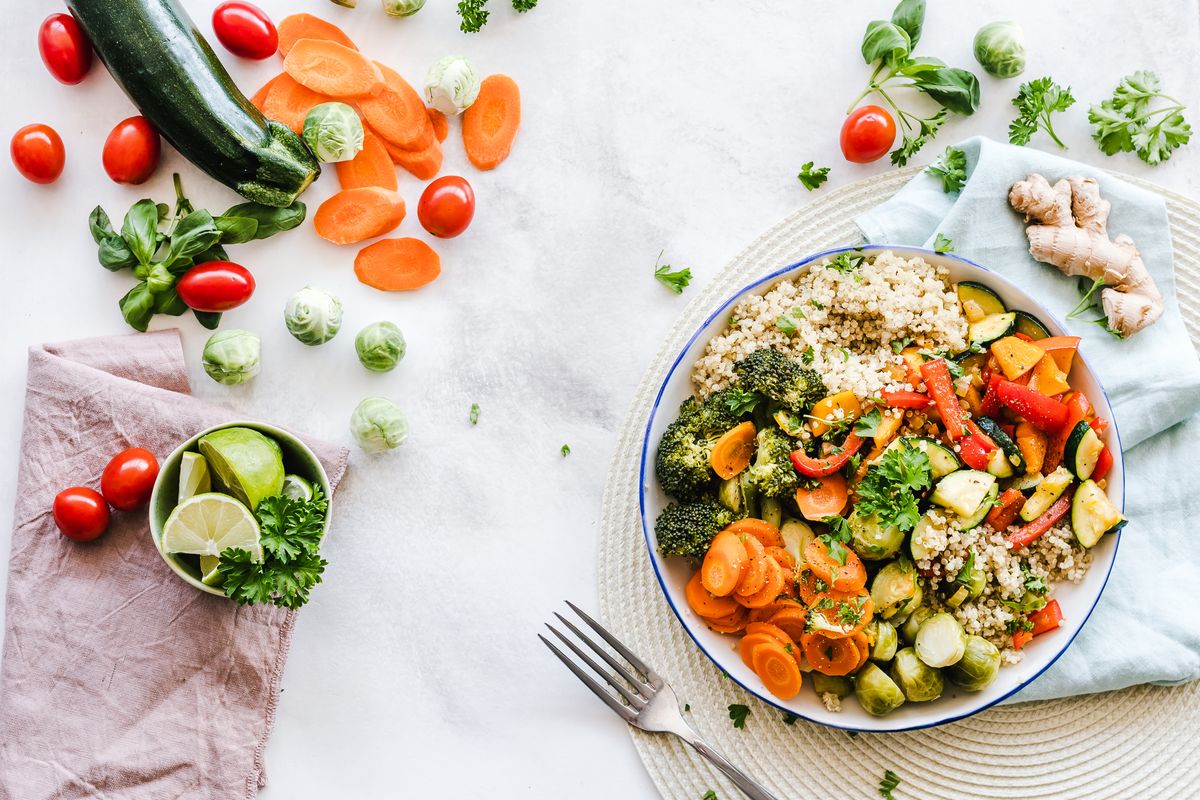
Eating for health is not about starving yourself or sticking to expensive menus. It is about choosing food that is "complete, varied and moderate" at every meal. When the body receives the nutrients it needs in a balanced way, the body's systems work well, immunity stays strong, and we feel energised throughout the day.
Eat all five food groups — varied and in moderation
The most basic principle of healthy eating is to cover all five food groups: rice and starches, meat/protein, vegetables, fruit and fats. Each group has a different role, and eating a wide variety and rotating your choices helps ensure you get a full range of vitamins and minerals. Most importantly, keep it "moderate" — eat enough to be satisfied, neither too much nor too little.
Emphasise vegetables, fruit, wholegrains and lean protein
These food groups should be the stars of your plate, because they are high in fibre, vitamins and antioxidants, help you feel full for longer, support good digestion, and make weight easier to control.
- Colourful vegetables: have them at every meal — leafy greens, orange and yellow vegetables, and root vegetables
- Whole fruit: choose fresh fruit instead of juice, so you get the fibre and a less concentrated dose of sugar
- Wholegrains: brown rice, oats and wholewheat bread instead of refined white starches
- Lean protein: fish, chicken breast, eggs, tofu and dried beans
Cut down on sugar, fat, salt, fried food and processed food
The major enemies of health in our era are sugar, saturated fat, sodium and processed food, which are directly linked to obesity, diabetes, high blood pressure and heart disease. Cutting back gradually, little by little, lets your palate adjust and makes it sustainable.
- Cut down on sweet drinks, soft drinks, bubble milk tea and desserts
- Avoid fried and very fatty food, and switch to boiling, steaming, grilling or baking
- Taste before you add seasoning, and use less salt, fish sauce, soy sauce and seasoning powder
- Read nutrition labels, and watch out for processed and ready-to-eat foods that are high in sodium
Drink enough plain water
Plain water is the best drink for the body, helping circulation, digestion and waste removal to work well. We recommend drinking about 6–8 glasses a day, and more when the weather is hot or you exercise. Try carrying a water bottle with you to remind yourself to sip throughout the day.
Build a simple "healthy plate" at every meal
The healthy-plate rule helps you estimate proportions without counting calories: divide your plate into sections and arrange your food to fit. It is easy to remember and works for every meal.
- Half a plate of vegetables, emphasising colourful vegetables, both raw and cooked
- A quarter of rice/starch, mainly wholegrains
- A quarter of lean protein, such as fish, chicken, eggs or tofu
- Finish with fresh fruit, and drink plain water instead of sweet drinks
Easy tips you can start today
Adjust gradually, a little at a time — for example, add another serving of vegetables per meal, switch white rice to brown rice, order drinks with less sugar or no sugar, take one less serving of rice, and drink plain water before a meal. These small habits are realistic and add up to good health over the long term.
Beyond eating the right way, an annual health check-up at Doctor Chat Clinic also helps monitor your health closely — your blood sugar, blood lipids and blood pressure — so you stay aware of changes and can adjust your eating habits before they turn into disease.
Signs that you should get a health check-up
If your weight goes up or down unexpectedly without trying, you feel chronically tired, or you are unusually thirsty or urinating frequently, do not ignore it — these may be signs of a hidden health problem. You should see a doctor for assessment and to find the cause.